

One pig, one peso.
Admin Team
‘One pig, one peso; big pig, two peso’!
Anyone that knows Dr Harry, they know he is a bit of a character. Below he tells an accurate (not)
depiction of what happened on an out call when Dr Dan and Nurse Alicia joined him in the great pig wrangle of 2020. If you stick around until the end you are in for a laugh!
Anyone that knows Dr Harry, they know he is a bit of a character. Below he tells an accurate (not)
depiction of what happened on an out call when Dr Dan and Nurse Alicia joined him in the great pig wrangle of 2020. If you stick around until the end you are in for a laugh!
‘One pig, one peso; big pig, two peso’
Let’s not let facts get in the way of a good story. The following story can be confirmed by three eyewitnesses who can confirm that at least some of this story is true, for a more accurate (and more boring) account, please see the diligently detailed case notes.
On a cool Autumn day, I was approached by a fellow with a small, somewhat unusual task which he felt fell under the broad umbrella of veterinary medicine. Mixed veterinary practice brings with it all the unusual, out of the way, and uncommon animal tasks, and this was no different. The task you ask, the care of this fellow’s pet pig’s feet!
Not one to step back from a challenge, I whole heartedly agreed to this porcine pedicure! I was bolstered by the recent success of a nail in clipping in a particularly prickly Pug so I thought a particularly prickly pig would be the next step up. Boy was I wrong. I set out optimistically for this somewhat obscure problem, however, I was not totally naive, and I thought perhaps indeed that this could be a big job, so I of course brought along the secret weapon, Daniel ‘Django’ Gerrard, self-proclaimed ‘Chief Pig Wrangler’. Fortunately, it was Django’s day off and he was overly excited to watch me handle this hog. His only terms and conditions were regarding to payment, ‘one pig, one peso’. An absolute bargain I thought!
We had along with us Alicia, a fantastic nurse with experience in pigs which rivaled mine, that is to say, very limited. Alicia was also excited to see how things would turn out as I was confronted with my first piggy problem.
After a brief drive though the countryside and after a final stretch around the side of a timbered hill, we found ourselves at this site of what was to become, the infamous, ‘Great Pig Wrestle of 2020’.
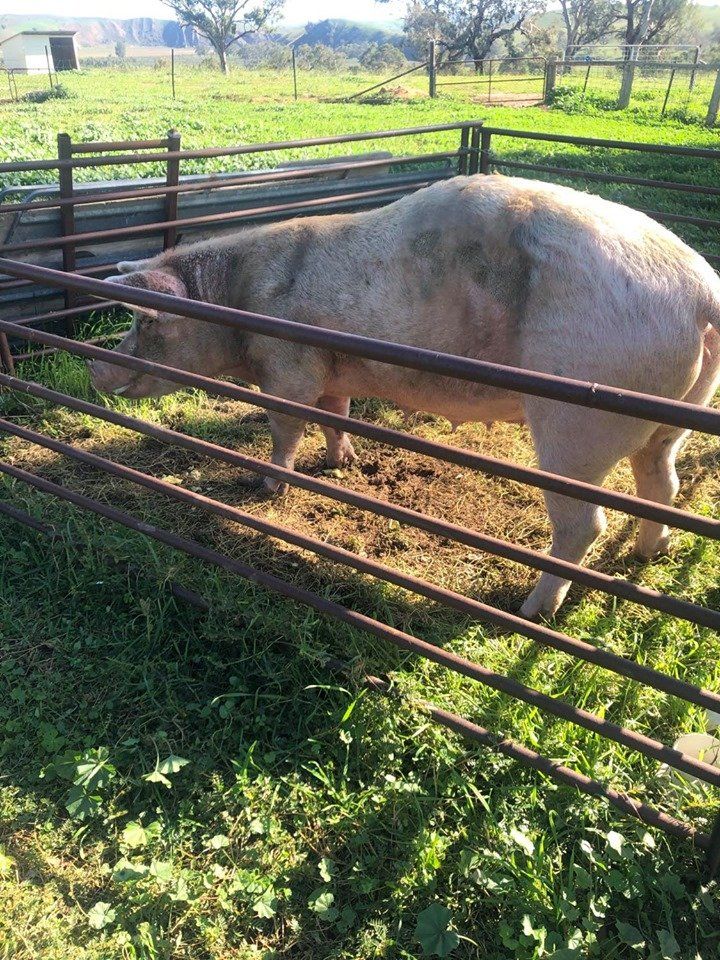
In a small sty, sat a hefty sow, at least 350 kilograms (it gets bigger every time I tell it). Upon seeing my baconer patient, the first misgivings began to enter my mind. Here I was, a new grad vet, dealing with my first hoggy hurdle, armed only with advice I’d read in a textbook, which now seemed woefully inadequate. Daniel, who by this point is starting to sense my concerns, carefully looks at me before saying in a calming voice, “just consider this a great learning opportunity”, before starting to giggle at my present dilemma.
After introductions were made to the owner, we met our cantankerous patient, ‘Hogzilla’ (name changed for the pig’s privacy). ‘Hogzilla’ was a fine pig specimen, who’d been fattened on pumpkins and squash and other assorted garden produce. She was as tall as she was wide and twice as long, she had a long fierce snout and two beady eyes, glinting with rage. Her curly tail twitched as she watched our approach. She snorted and huffed and the hairs on the back of her neck stood up. On closer inspection, once immediate terror had settled, we saw her problem, her front toes had grown and curled with age and were now causing her some grief.
In these cranky creatures, sedation is a must, so I was back to the vehicle to grab a little bit of ‘soothe in a syringe’. Once I’d drawn up my dose, I just had the minor inconvenience of getting it into the provoked porker. The problem was solved simply by reaching over the fence as ‘Hogzilla’ walked by snorting through the rails, and sticking the needle into her rounded rear end. Surprisingly, this went off without a hitch. I injected the sedation with barely a hiccup from ‘Hogzilla’.
Then we sat back and waited. Five minutes passed. Ten minutes passed. Fifteen minutes passed. Nothing. ‘Hogzilla’ stood still, staring furiously back at us. You can only imagine my disappointment (and fear).
As vets, and particularly new grad vets, we want to get the right amount, of the right sedation, into the right animal, every time. It seems that this wasn’t going to be the case, this time. I wasn’t too proud to say that I’d underestimated our patient’s size and weight and attitude. So I trudged back to the car and drew up more sedation.
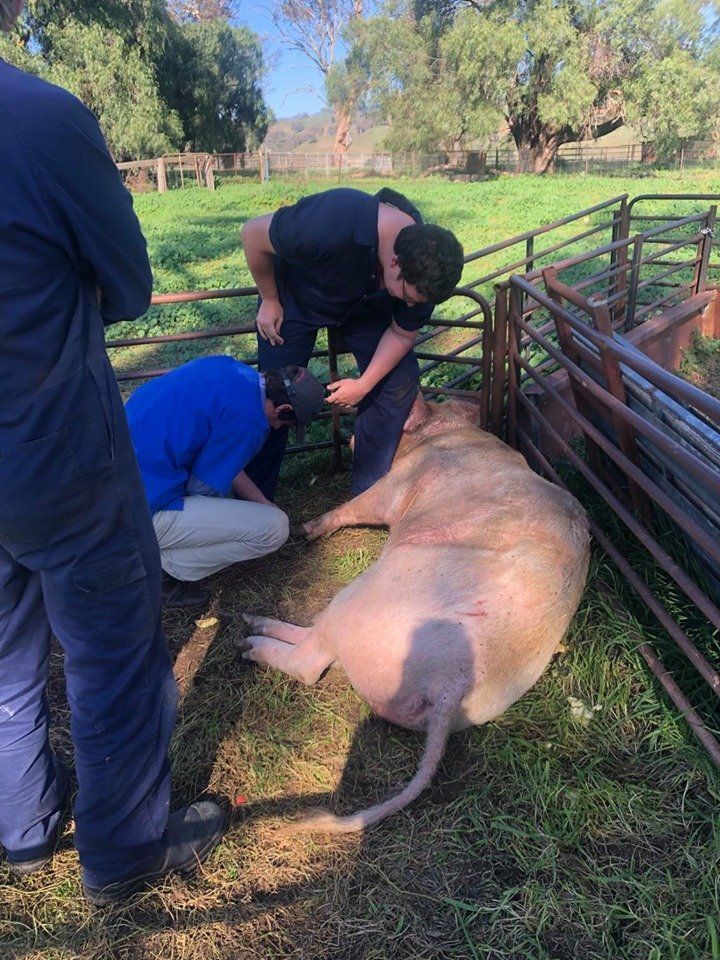
Round two of ‘poke a needle into the backside of a displeased pig’ began, and surprisingly, it all went well, again. Quietly confident that we were on to a winner now, I collected the hoof trimming gear as we waited. This time, things were more successful, with ‘Hogzilla’s’ irate eyes slowly drooping, until eventually she lay down, sedate. Unfortunately, that was the end of our sedation effects, and although she was down, she was still wide awake and not wanting to be handled. We still had the task of rolling her on her side and trimming her feet. I’ll be honest, if it was just me, that would have been it, there was no chance my lean frame was going to be shifting that pile of pig anywhere.
But of course, the secret weapon. Enter, ‘Django’, our chief pig wrestler. Standing at six foot four, and weighing in at 96 kilos of rippling muscle, undefeated in eleventeen bouts, our champion.
But this was going to be his toughest battle yet, an even though ‘Hogzilla’ was sedated, I was worried this pig might prove too much, oh boy I was wrong.
He rolled up his sleeves and flew on in, there were squeals, there were howls, there were yells, there were yowls. He wrestled and wrastled and snaffled and spat, there was dust, there was mud there was all kinds of sludge, and then, just like that, this big piggy problem was a small swine solution. ‘Hogzilla’ tamed, lying peacefully on her side.
I went to work with my hoof trimmers as Django held ‘Hogzilla’s’ head, and in moments, it was done. Alicia politely smirked, ‘well, I’m not sure what all the fuss was about’.
We left ‘Hogzilla’ to snooze off her sedation and we returned to the car, happy that things had gone well. As I was packing a few things away, Django turned to me a quietly said, “one pig, one peso; big pig, two peso”.
Which I still thought was a pretty good deal.
(note: no pigs or veterinarians were harmed in this dramatized affair. Don’t let facts get in the way of a good story).
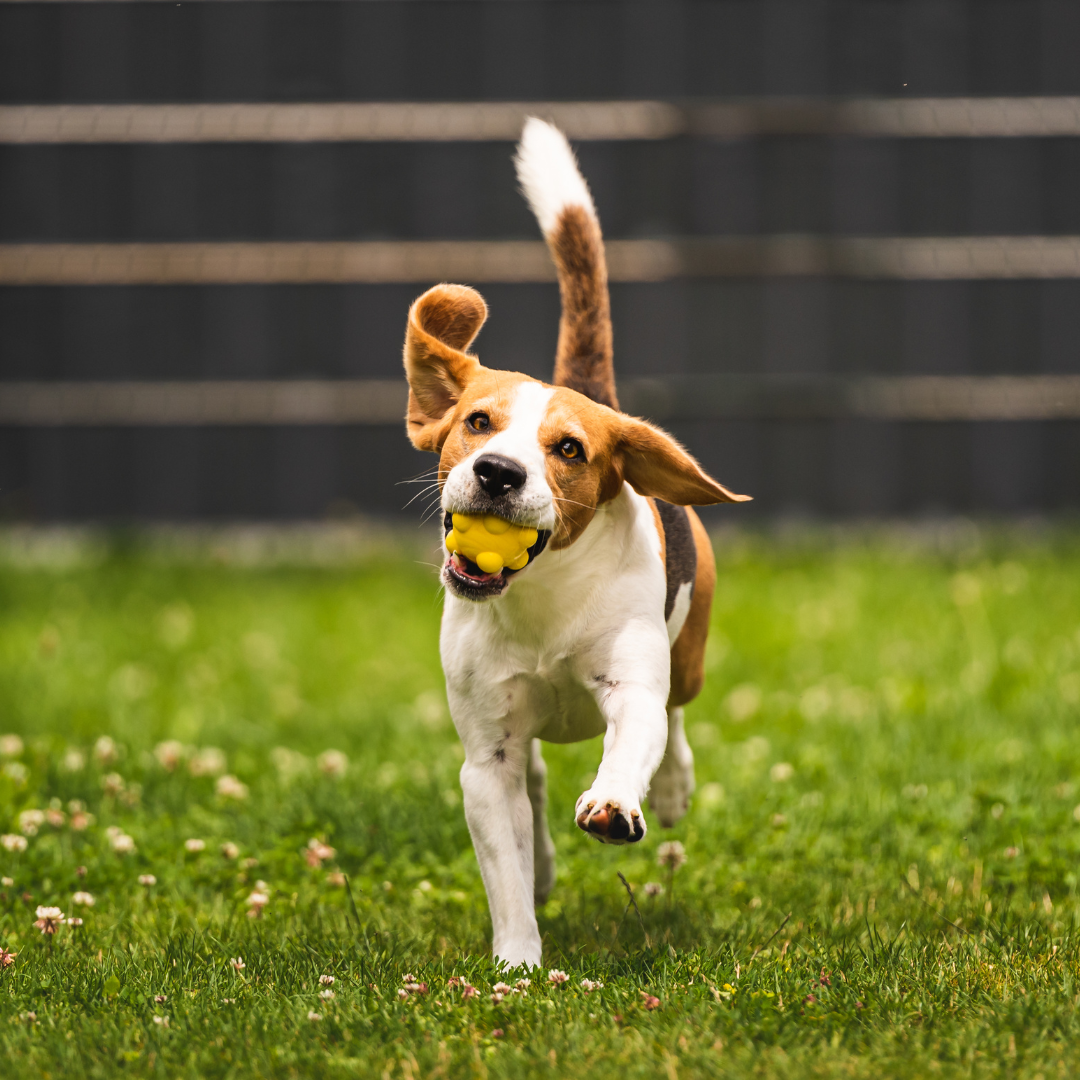
Spring brings longer days and more opportunities to enjoy the outdoors with your pet. While the warmer weather is exciting, it also brings seasonal hazards that can put curious dogs and cats at risk. Across New South Wales, spring means increased snake activity, parasites, blooming plants and seasonal allergens. Knowing what to look out for can help keep your pet safe. At Yass Valley Veterinary , we’re passionate about preventative care and helping pets stay healthy all year round. Why Spring Can Be Risky for Pets Warmer weather encourages pets to spend more time outdoors, but it also creates ideal conditions for seasonal hazards. As temperatures rise, snakes become more active, parasites increase, and gardens fill with plants and products that may be harmful to pets. Even pollen and grasses can trigger allergies in some animals. Protecting your pet during spring can help: Reduce the risk of snake bites Prevent parasite infestations Avoid accidental poisoning Keep skin and ears healthy Enjoy safer outdoor adventures Common Backyard Hazards to Watch For Many spring hazards are easy to overlook until they become a problem. Common risks include: Snakes in long grass, bushland and gardens Ticks, fleas and worms Seasonal allergies caused by pollen and grasses Toxic plants, fertilisers, herbicides and snail baits Grass seeds and other hazards hidden in long grass If you notice your pet becoming unwell after spending time outdoors, contact your veterinarian as soon as possible. How to Keep Your Pet Safe This Spring Simple preventative measures can significantly reduce your pet’s risk. Some easy ways to protect your pet include: Keep parasite prevention up to date. Avoid long grass where snakes may be hiding. Check your pet after walks for ticks, grass seeds or injuries. Keep toxic plants and garden chemicals out of reach. Supervise pets while they’re exploring the backyard. Contact your veterinarian if your pet appears unwell. Even small changes can make a big difference to your pet’s health and safety. When to Seek Veterinary Care Prompt treatment is essential if your pet has been exposed to a seasonal hazard. Seek veterinary care immediately if your pet: May have been bitten by a snake Has eaten a toxic plant or garden chemical Shows signs of weakness or collapse Has difficulty breathing Vomits repeatedly Develops severe swelling or allergic reactions Early treatment often leads to the best possible outcome. Prevention is the Best Protection Many spring emergencies can be prevented with regular health checks and year-round preventative care. During your pet’s annual examination, your veterinarian can recommend the most appropriate parasite prevention, discuss seasonal risks in your area and help you prepare for a safe spring. A little preparation now can help keep your pet happy and healthy throughout the season. FAQs: Hidden Dangers in Your Backyard This Spring Can pets get seasonal allergies? Yes. Pollen and grasses commonly cause itchy skin, ear infections and irritated paws in both dogs and cats. What should I do if I suspect a snake bite? Keep your pet calm and seek emergency veterinary attention immediately. Do not wait for symptoms to develop. How often should I use parasite prevention? Follow your veterinarian’s recommendation based on your pet’s lifestyle and the parasites common in your local area. Are garden products dangerous for pets? Yes. Fertilisers, herbicides and snail baits can all be toxic if ingested, so they should always be stored safely and used according to the manufacturer’s instructions. How can I make my backyard safer this spring? Keep grass short, remove toxic plants where possible, maintain parasite prevention, supervise outdoor play and regularly check your pet after spending time outside. Keep Your Pet Safe This Spring with East Doncaster Vet Hospital Spring is one of the best times of year to get outdoors with your pet, but it’s also important to stay aware of the seasonal hazards that come with warmer weather. Whether you need advice on parasite prevention, seasonal allergies or spring safety, our experienced veterinary team is here to help. Contact Yass Valley Veterinary today to book a health check and help your pet enjoy a safe and healthy spring.
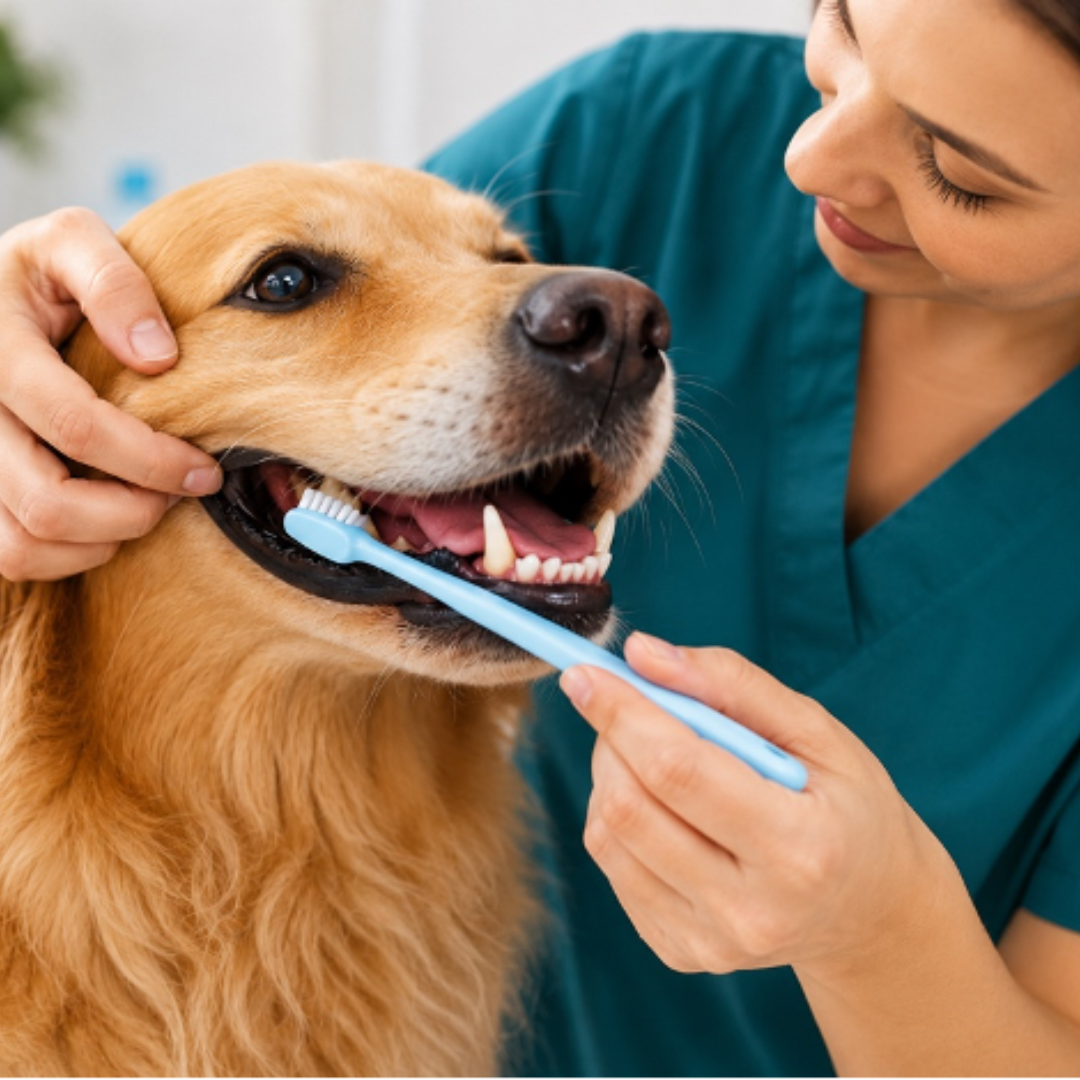
Learn how to keep your dog or cat's teeth healthy with simple dental care tips and preventative advice.
The body content of your post goes here. To edit this text, click on it and delete this default text and start typing your own or paste your own from a different source.
